A structured, experience-based exploration of Long Covid (MCAS, POTS, ME/CFS) and recovery in real life—without simple answers, but with practical observations, adaptations, and experiments. From conventional medicine and targeted supplements to creative everyday adaptations, motorbike-based rehabilitation, and plant medicine journeys, this space brings together what has supported my healing across different layers.
My understanding
Long Covid is not one single problem.
Long Covid can affect the body as a whole system — nervous system, immune function, circulation, metabolism, gut, and recovery capacity can all become destabilised. That is why recovery often requires a broader, more integrative approach rather than looking at one symptom in isolation.
Stabilising
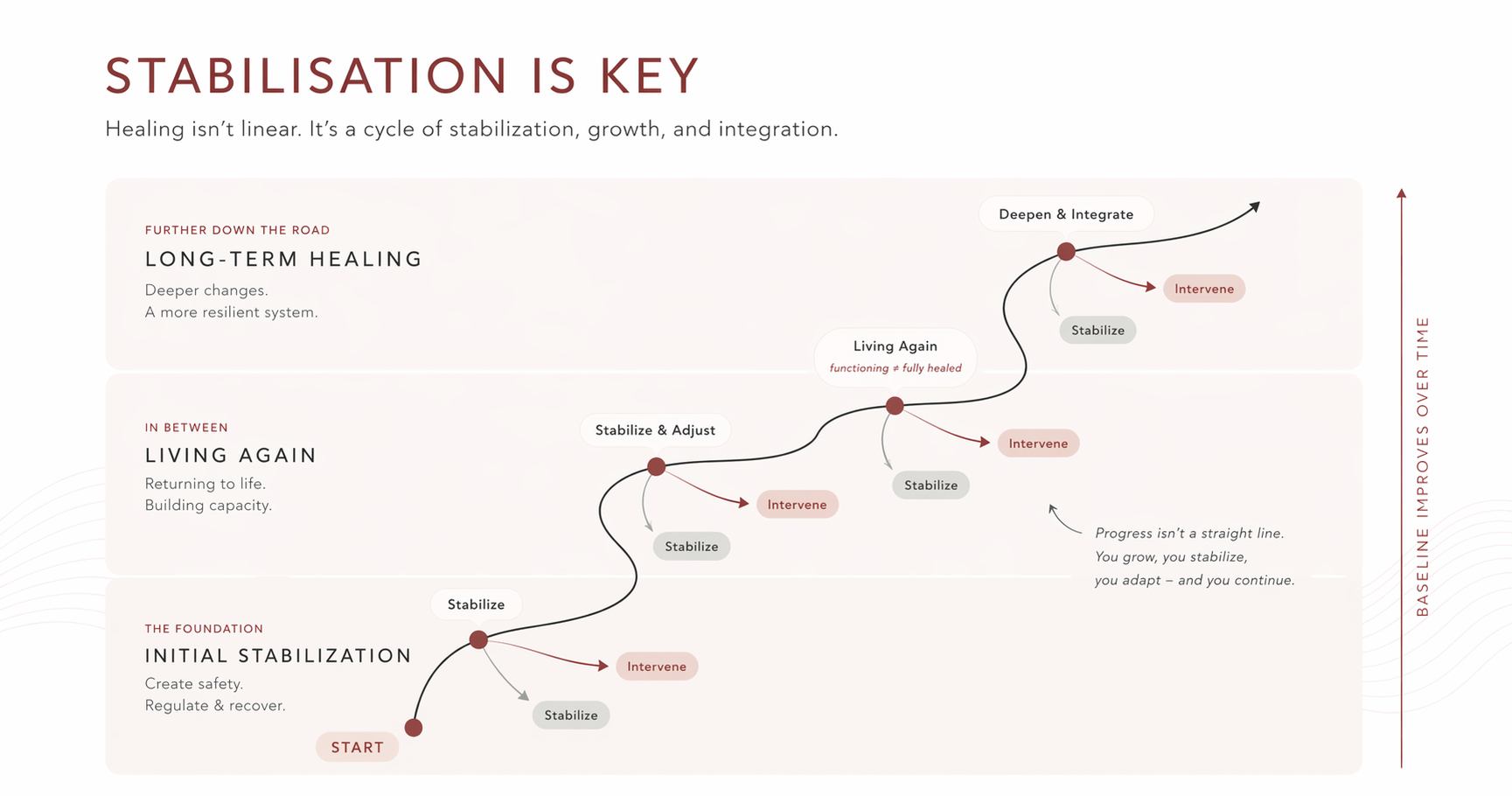
Stabilisation is not a side step. It is the foundation.
Recovery is rarely linear. The body often moves through waves of instability, partial improvement, readjustment, and integration. Stabilisation is the recurring mechanism that helps the system reduce load and regain regulation before moving forward.
This matters after crashes, reinfections, interventions, and phases of returning to a more active life. Without enough reduction and consistency, improvements often remain short-term and difficult to sustain.
Reduce load
Less pressure, less variability, fewer inputs.
Create safety
Support the system before adding more.
Integrate
Let changes settle before the next step.
Interventions & Protocols
A practical finder for supplements, tools, and recovery strategies.
Once the system is stable enough, targeted interventions can support specific layers of recovery — from mast cell reactivity, gut stability, inflammation and microcirculation to dysautonomia, sleep, energy metabolism, and nervous system regulation.
This section brings together the protocols, supplements, tools, and practical strategies I have explored or used as part of a structured recovery approach.
Long-term recovery
Looking beyond the symptoms.
Long-term recovery is not about blame. Many people became ill while doing many things “right” — working hard, eating consciously, exercising, caring for others, and trying to live in a disciplined or health-oriented way.
Once the body has stabilised, it can become important to look at what still keeps the system under strain: stress patterns, unresolved load, demanding life structures, sensory overload, relationship dynamics, work pressure, or a way of living that no longer fits the body’s needs.